Project PEX1-Vision
Retinal Gene Therapy to Preserve Vision
Retinal Gene Therapy to Preserve Vision
For children and adults with PEX1-related peroxisome biogenesis disorder, Zellweger spectrum disorder (PBD-ZSD), progressive retinal degeneration can lead to irreversible blindness, often beginning in infancy or early childhood.
Today, there are no approved therapies to stop or slow vision loss.
For the first time, a targeted retinal gene therapy may offer a path toward preserving meaningful vision.

Retinal gene therapy is one of the most clinically advanced and validated forms of gene therapy today with established surgical delivery approaches, measureable clinical outcomes, successful FDA-approved therapies in related retinal diseases, and strong regulatory precedent.

Affected families cite vision loss as one of the most meaningful symptoms they hope future therapies address.

Losing sight affects a child’s ability to communicate, learn, make friends, explore, and fully understand the world around them.

This clinical trial will expand scientific understanding of peroxisomes, leading to more discoveries and treatment advances.

Insights can be leveraged for other rare diseases. 1 in 10 people are diagnosed with a rare disorder. 95% of those disorders have no FDA- approved drug treatment.
Vision loss affects far more than eyesight. For individuals living with PBD-ZSD, progressive retinal degeneration impacts communication, mobility, independence, learning, safety, and connection to the world around them. According to the GFPD’s Voice of the Patient Report, vision loss is among the most meaningful symptoms families hope future therapies can address.
Retinal gene therapy is one of the most clinically advanced and validated forms of gene therapy today, with:
The eye is uniquely suited for gene therapy, making retinal disease one of the most promising areas for therapeutic development. Project PEX1-Vision is designed to deliver a functional copy of the PEX1 gene directly to retinal cells, with the goal of:

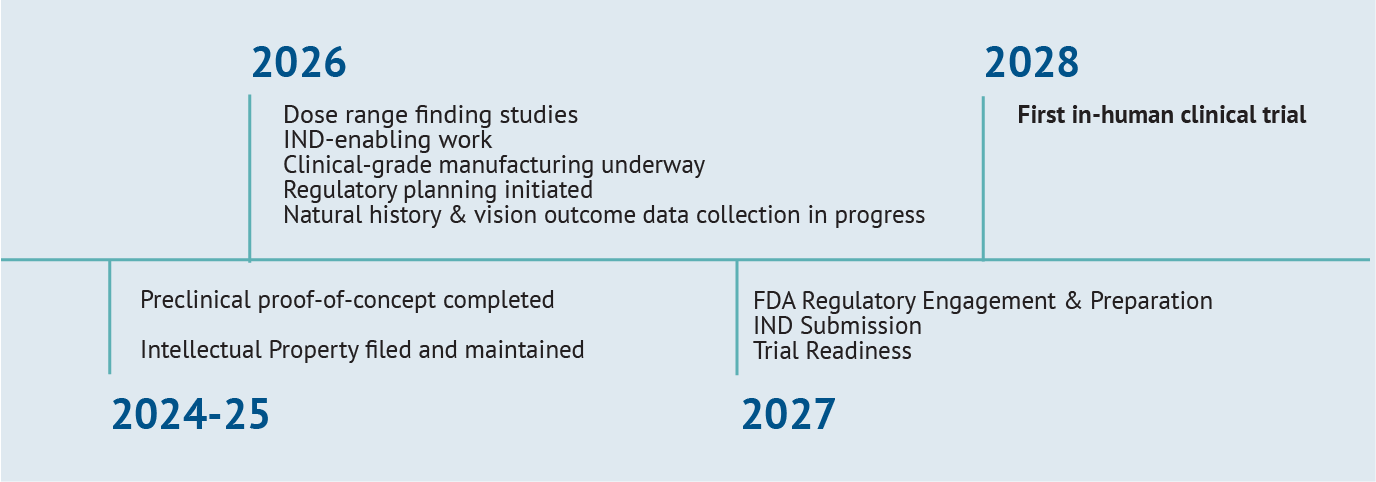
$4M+ USD invested to date. $1.3M remains. More than $4 million has already been invested in Project PEX1-Vision. Preclinical proof-of-concept is complete, intellectual property is secured, and clinical-grade manufacturing is underway.
$1.3M is the final gap between completed science and allowing for a first-in-human clinical trial. Anything raised beyond this goal will be used to continue advancing clinical stage treatments for peroxisomal disorders.
The GFPD is seeking to raise
by the end of 2026 to reach the following critical milestones:


Behind every scientific milestone is a child, adult, and family navigating the realities of progressive vision loss and peroxisomal disease every day. Meet the individuals and families helping drive Project PEX1 forward.

Children’s Hospital Los Angeles / University of Southern California
Dr. Argyriou designed and completed the preclinical efficacy studies behind Project PEX1-VISION, carrying that work from her doctoral training through her postdoctoral research. Today she coordinates every arm of the project, including manufacturing, toxicology studies, and intellectual property.

Research Institute of the McGill University Health Centre
Dr. Braverman is a world expert in peroxisomal disorders and has dedicated her career to understanding these conditions and developing therapies for them. She leads the natural history studies for Zellweger Spectrum Disorder (ZSD).

Research Institute of the McGill University Health Centre
Dr. Omri is a technical expert in mouse retinal biology. He performed the assessments showing preservation of retinal structure following therapy.

University of Pennsylvania
Dr. Bennett is a pioneer of retinal gene therapy: she developed the first taken from bench to approval, Luxturna, now internationally approved and available for clinical care. She has been a consultant and collaborator on Project PEX1-VISION from the very beginning, generating our therapeutic vectors and advising on study design. She also serves on the boards of several retinal gene therapy companies.

University of Southern California
Dr. Hacia is an expert in peroxisomal biology and contributed to the vector development and cell engineering work for the project.

Research Institute of the McGill University Health Centre
Dr. Koenekoop specializes in genetic retinal disease across the full path from molecular genetics and clinical ophthalmology to human trials and drug development, with a longstanding focus on childhood blindness. He has taken part in hundreds of ophthalmic clinical trials using advanced measures such as mobility courses, rod perimetry, and retinal cell imaging.

University of Rochester
Dr. Levin is an ophthalmologist specializing in inherited retinal diseases and has served as lead on multiple clinical trials. He has published clinical descriptions of patients with PEX-related disease, and he is the only physician worldwide to hold simultaneous US board certifications in pediatrics, ophthalmology, and child abuse pediatrics.

University of Alberta
Dr. Benson is an academic ophthalmologist and retinal gene therapy surgeon whose work centers on genetic eye disease, including peroxisomal conditions. He is a co-investigator on two clinical trials.
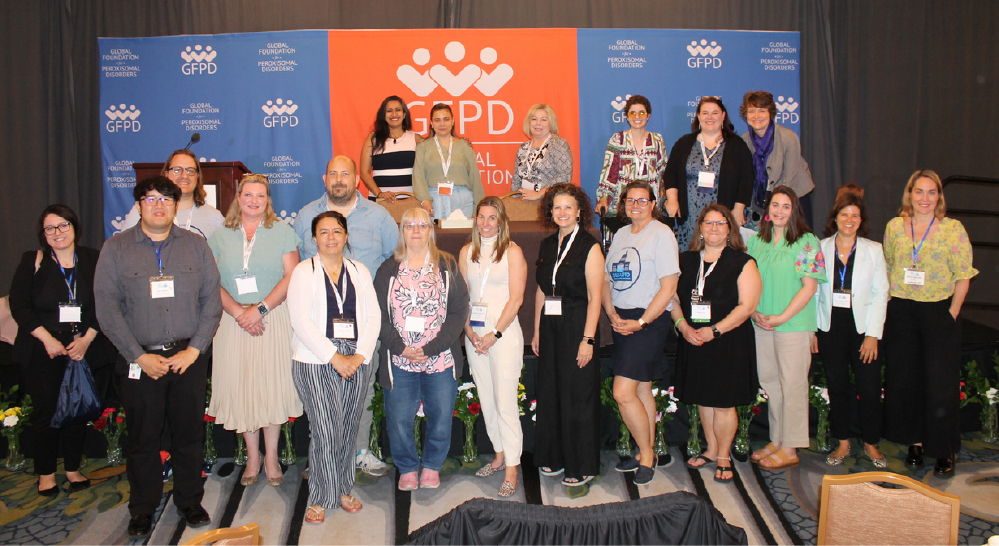
Families participating in the Voice of the Patient Report consistently identified preservation of vision as one of the most meaningful potential treatment outcomes.
Families also emphasized the connection between vision and communication, especially for children who rely on assistive hearing and speech technologies that require visual engagement.
Early preclinical studies have shown encouraging signs that retinal gene therapy may help preserve meaningful vision in Project PEX1-Vision.
*In mice carrying the same PEX1 mutation most common in patients, a single injection of the therapy produced:*
*Omri et al., 2026 bioRxiv [Preprint]. 2026 May 14:2026.05.11.723906[manuscript under review]; building on Argyriou et al., Molecular Therapy: Methods & Clinical Development, 2021.*
I added a link to the preprint