
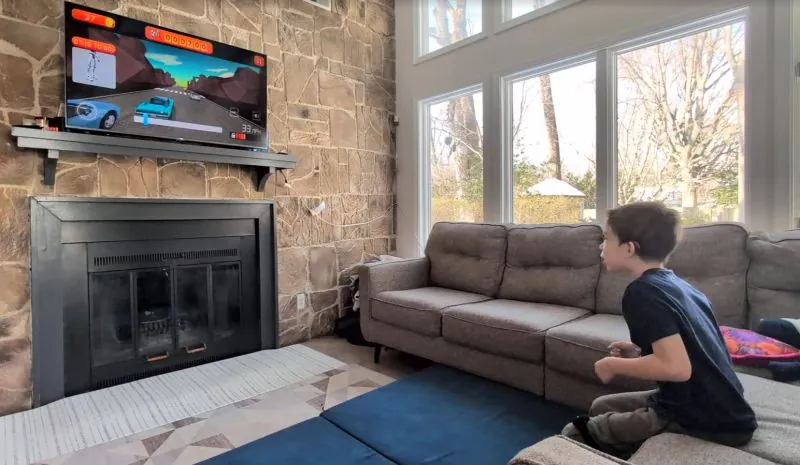
For GFPD Warrior Diego, and many other peroxisomal disorder patients, movement practice is an important part of everyday life. But practicing at home between physical therapy appointments is not always easy.
His family wanted to find a way to make those activities feel less like an assignment and more like something Diego could enjoy. A technology-based tool called LusioMATE offered them a new approach: turning movement into play.
“Attending physical therapy appointments is important and helps, but Diego needed more in between appointments. Getting him to participate at home was a challenge, until LusioMATE made it a game!”
Andrew Longenecker, father of GFPD Warrior Diego and member of the GFPD Board of Directors
Supporting Movement Between Therapy Sessions
Physical and occupational therapy can play an important role in supporting movement, strength, coordination, and function for individuals living with peroxisomal disorders. In fact, evaluation for early physical, occupational, and speech therapy is recommended for all children with Zellweger spectrum disorder (ZSD) (Braverman et al., 2016). Therapists can assess movement and function, work directly with individuals during in-person sessions, help establish specific and personal goals, and identify activities and strategies to support those goals.
Therapy often doesn’t end when the appointment does. The work between sessions matters. Therapists may provide exercises, movements, and activities to practice at home, helping reinforce the skills addressed during therapy and carry that work into everyday life. Staying active and consistently practicing these activities between appointments can be an important part of maintaining progress and continuing to work toward individual goals.
A More Engaging Way to Practice at Home
While continuing movement practice between therapy sessions can be valuable, finding ways to make that practice consistent and motivating can be challenging for many families. Incorporating movement into everyday routines takes time, energy, and creativity, particularly when exercises can begin to feel repetitive or difficult to engage with.
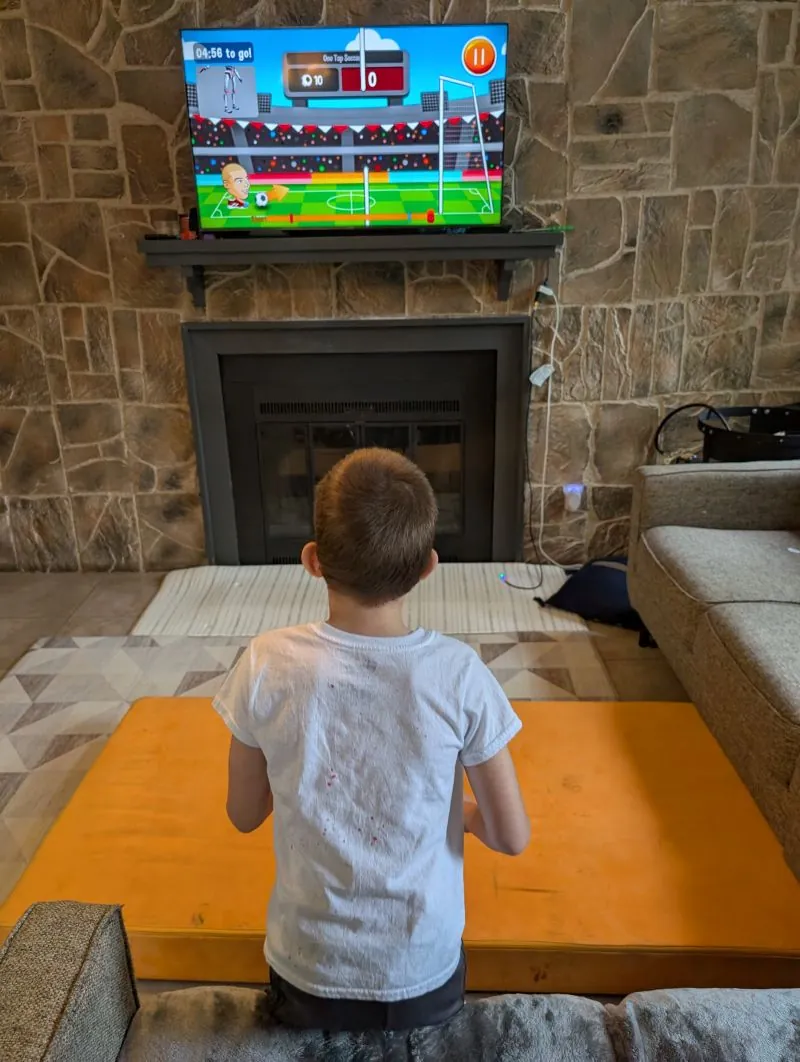
For Diego and his family, finding a way to make movement practice more engaging was a game-changer. When they discovered LusioMATE, they found an opportunity to incorporate movement practice into Diego’s daily life in a way that felt more like play than just another therapy exercise. The system uses wearable sensors that respond to a player’s movements and connect them to interactive games on a phone, tablet, or television. For Diego, that meant movement practice could feel like an interactive game.
Rather than changing what Diego was working toward, LusioMATE offered a different and more motivating way for him to practice.
LusioMATE also takes into account the individual goals set forth from therapists and medical professionals.
“One of the things I like (about LusioMATE) is that the sensors can be placed in different locations and the movement required to play can be tailored to what Diego is working on. That connection between the therapeutic goal and the game is pretty important.”
Andrew Longenecker, father of GFPD Warrior Diego and member of the GFPD Board of Directors
What Is LusioMATE?
LusioMATE is a technology-based system developed by Lusio Rehab. It combines wearable sensors, interactive games, and an online dashboard.
According to Lusio Rehab, the sensors can be placed on different areas of the body and configured to respond to a variety of fine- or gross-motor movements. The system is designed for use at home, in clinical settings, or as part of a hybrid therapy routine.
When incorporated into a therapy plan, a participating physical therapist, occupational therapist, or other clinician may also be able to use the system’s dashboard to monitor activity and adjust movement goals.
Working With Your Therapy Team
Every GFPD Warrior has different abilities, goals, and safety considerations. A tool that works well for one person may not be appropriate for another, which is why individuals interested in LusioMATE or similar technology should begin by talking with their own healthcare team, who know their specific needs. Questions families may want to ask include:
- Could game-based movement activities complement my/my Warrior’s current therapy plan?
- Are wearable movement sensors appropriate for my/their abilities and needs?
- Which movements or goals could be practiced using this type of system?
- How should the sensors be positioned, and what supervision may be needed?
- How could we determine whether the tool is helpful?
Making Movement Work for You
Diego’s experience is one example of how families can explore creative ways to make recommended movement practice more engaging. For him, adding an element of play made participating at home more enjoyable and gave his family another way to encourage movement between appointments. Every individual and family is different, and finding approaches that are motivating, meaningful, and supportive of therapy goals can help make movement practice a more natural part of everyday life.
Families interested in learning more can visit the Lusio Rehab website and share the information with their physical therapist, occupational therapist, physician, or other qualified healthcare professional.
The GFPD is sharing one family’s experience for informational purposes and does not endorse or recommend any specific product or service. This article is not medical advice. Families should consult their qualified healthcare professionals before adding equipment, activities, or technology to an existing therapy or care plan.
Reference
Braverman, N. E., Raymond, G. V., Rizzo, W. B., Moser, A. B., Wilkinson, M. E., Stone, E. M., Steinberg, S. J., Wangler, M. F., Rush, E. T., Hacia, J. G., & Bose, M. (2016). Peroxisome biogenesis disorders in the Zellweger spectrum: An overview of current diagnosis, clinical manifestations, and treatment guidelines. Molecular Genetics and Metabolism, 117(3), 313–321. https://doi.org/10.1016/j.ymgme.2015.12.009